The hub
Electric Gates in Banbury: What a Job Involves
An electric gate job covers a survey, a gate, a motor, wiring, controls, safety features and a handover. Below, the order of work is laid out in sequence, along with the decisions to take first and links to the detailed pages.
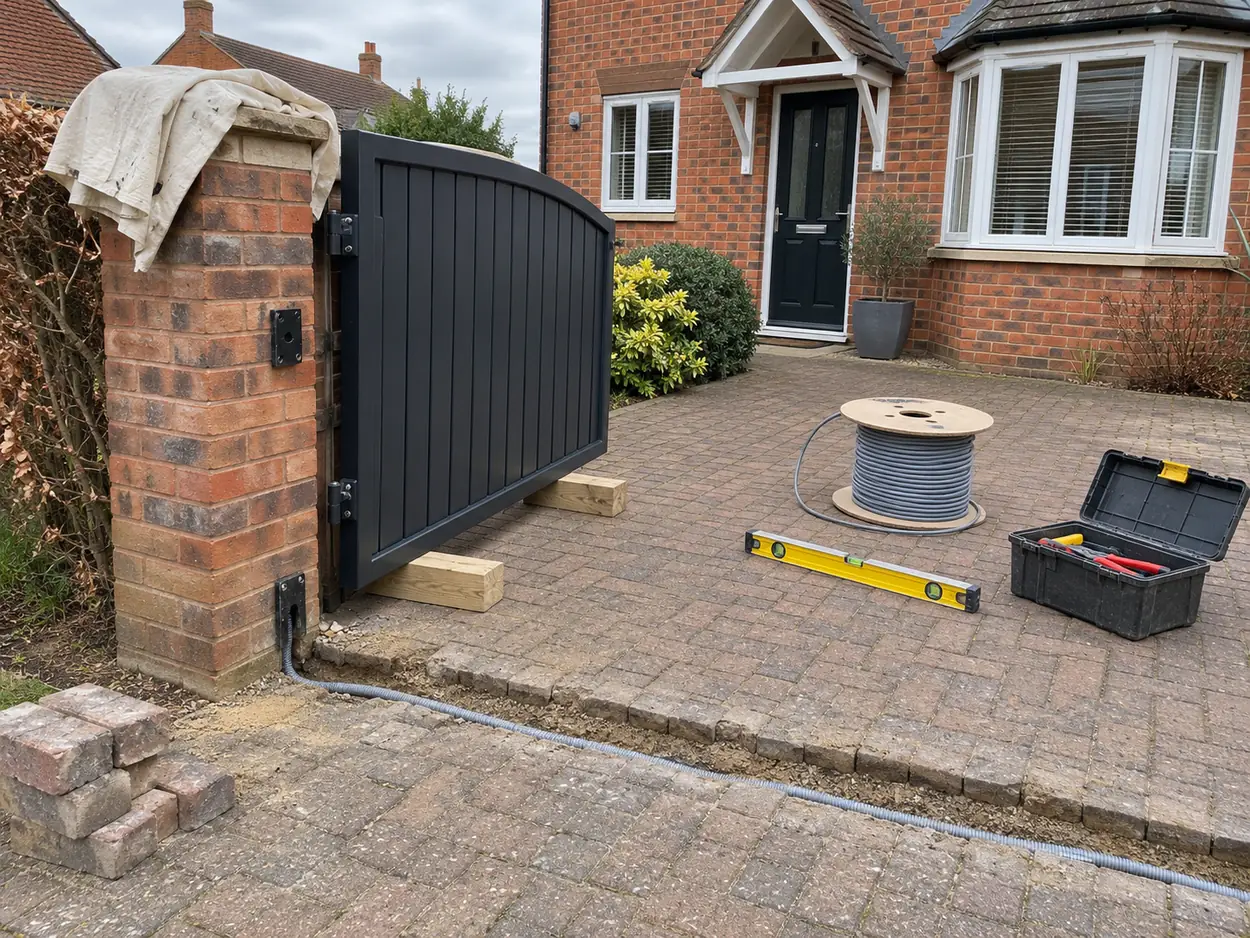
The homes in question
Electric gates are asked about for homes of every age, from village farmhouses to estate semis. Census 2021 recorded 65,897 households in Cherwell, a district-wide figure that is wider than Banbury, and sorted them by type of accommodation.
| Type of home | Households | Share |
|---|---|---|
| Semi-detached | 23,194 | 35.2% |
| Detached | 20,046 | 30.4% |
| Terraced | 14,268 | 21.7% |
| Purpose-built flats | 6,408 | 9.7% |
| Other accommodation, from conversions to caravans | 1,981 | 3.0% |
Nomis, carrying the 2021 Census table TS044 for the Cherwell district. Shares worked out here from the counts. Read on 19 November 2026.
Flats rarely have a drive of their own, so most requests come from houses with a front or side entrance. Which of those the Census would call detached or semi-detached matters less than the entrance itself: its width, its fall, the pillars or walls either side and where the power is.
The order of work
HSE’s pages describe powered gates as machines that are often unique to the place they stand. In its words:
Powered gates are machines which need to be properly designed, manufactured, installed and maintained to avoid serious, even fatal, injuries.
Source: HSE, powered gates: the basics, viewed 19 November 2026.
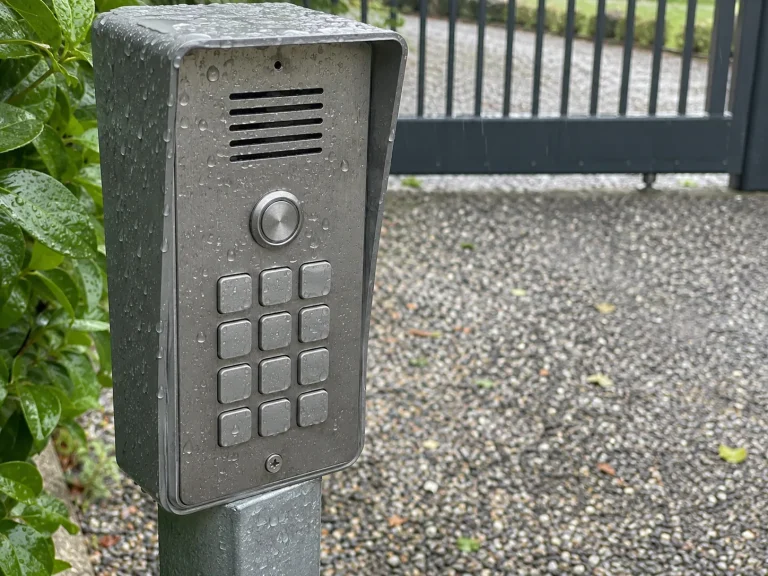
That puts the survey first. A typical order of work, drawn from HSE’s and FAAC’s pages and from plain reasoning where they are silent, looks like this:
- A survey of the entrance: width, fall, walls and pillars, wind, and where children, pets and passers-by may be.
- A risk assessment for that gate on that drive. HSE says most powered gates are unique products needing a specific risk assessment.
- The choice of gate and motor, covered on the swing or sliding page and the motors page.
- Groundwork and wiring, including a cable run, which is electrical work.
- Setting up the safety features and controls.
- Checks before handover, and the papers that should come with the gate.
Sources: HSE, ensuring powered doors and gates are safe; FAAC UK, top 10 factors when automating swing gates. Viewed 19 November 2026.
What to settle before work starts
- Which gate type suits the space, and what the slope of the drive does to it.
- The source of power, and who carries out the electrical work.
- Which safety features go on every moving edge, and how they will be checked.
- What is handed over at the end, in writing.
- Whether anything in the rules needs checking with the council first.
- Who looks after the gate afterwards, and how often it is checked.
More questions are gathered on the installer questions page, and the gate planner assembles a list from your answers.
Where to read next
- Gate safety, in HSE’s own words.
- The rules, for planning, wiring and dropped kerbs.
- Converting or repairing an old gate.
- Published prices, dated.
Ready for figures?
Tell the form about the entrance and attach a picture taken from the road.