Choosing a type
Swing or Sliding Electric Gates for a Banbury Drive
Whether a gate swings open or slides along a track depends on the room, the fall of the drive and the wind. This page uses what HSE and a manufacturer say about each, and says where plain reasoning takes over.
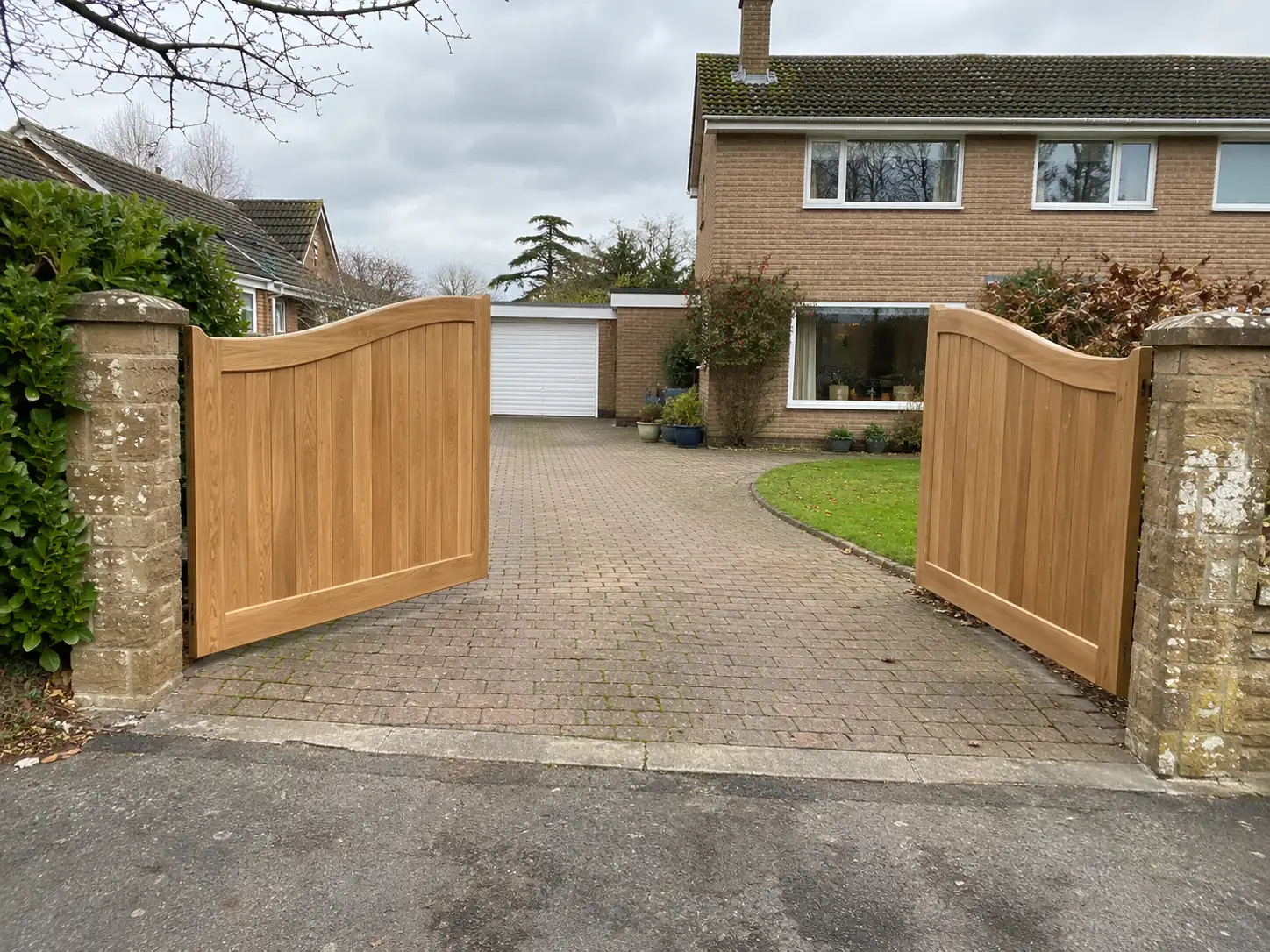
Swing gates
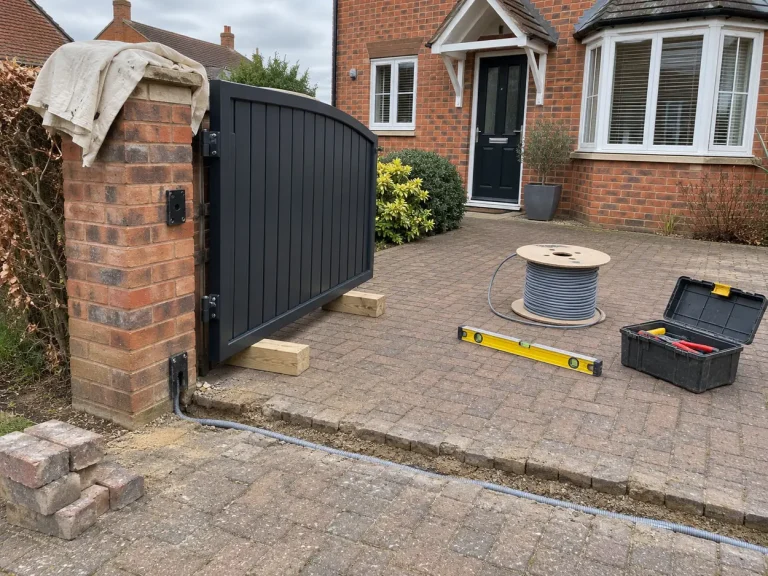
A swing gate hangs from hinges and opens through an arc, so something has to give way: a drive that is clear for the length of a leaf, and a surface that does not fall away so that the gate drifts. HSE lists the hazards a design should remove, and two of them belong to this type:
the gate running away down a slope, coming off tracks / falling over, closing gaps at hinges creating crushing points
Source: HSE, ensuring powered doors and gates are safe, viewed 19 November 2026. Quoted from a longer list.
Wind is the other point. HSE notes that close-boarded hinged gates may experience high wind loadings that the drive motors may not always be able to overcome
, and the manufacturer FAAC makes the same point for any gate that is full or part boarded:
This needs to be considered whenever the gate is full or partially boarded or is exposed to high winds.
Source: FAAC UK, top 10 factors when automating swing gates, viewed 19 November 2026. A manufacturer’s own guidance.
Sliding gates
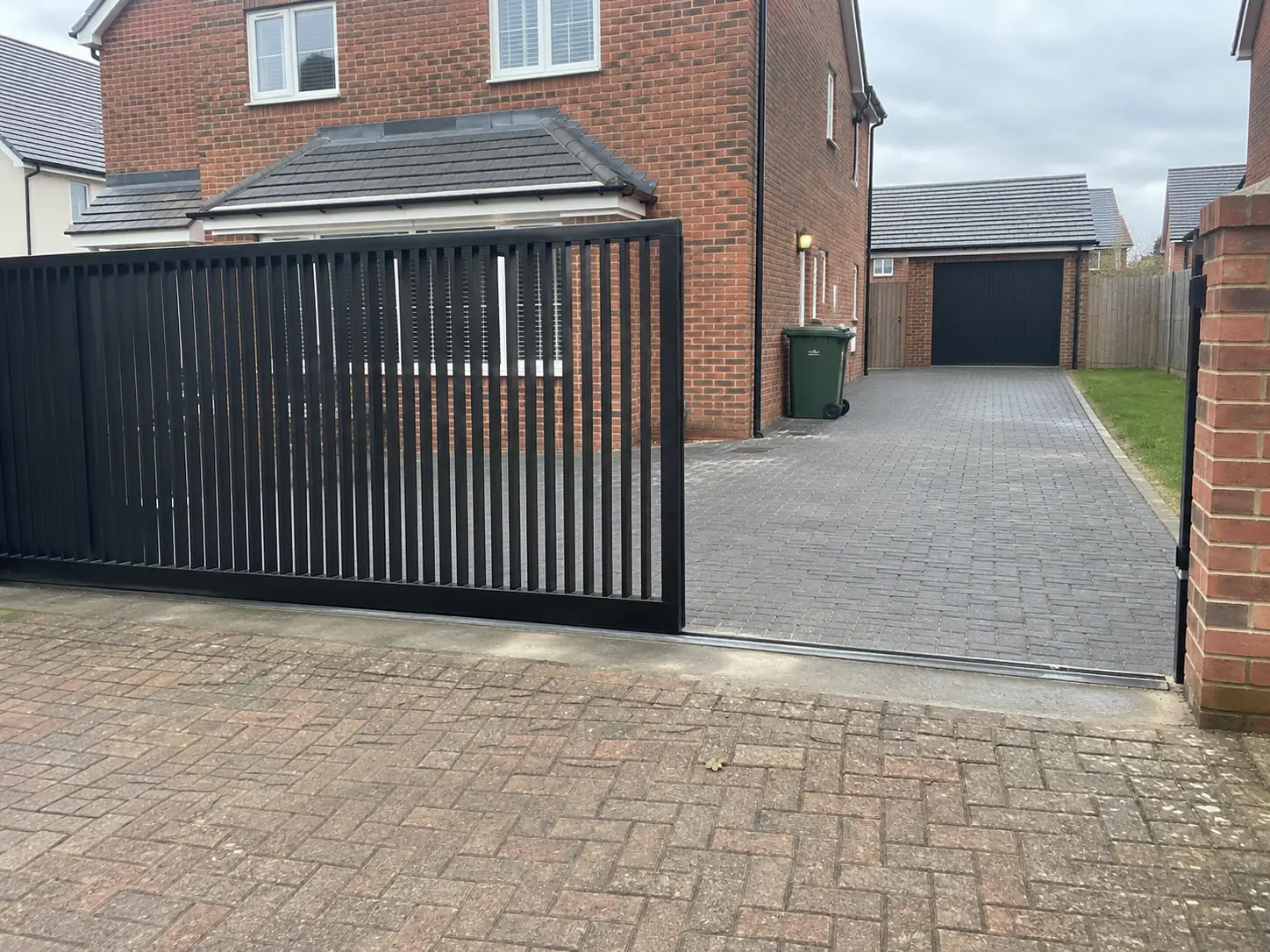
A sliding gate runs along a track beside the opening, so the room it needs is to the side rather than in an arc across the drive. The hazards HSE names move with it. On a slide the concern is the gap between the moving leaf and whatever stands close to it:
fencing off the back of sliding gates to avoid shear hazards between the gate leaf and fixed parts
Source: HSE, ensuring powered doors and gates are safe, viewed 19 November 2026. Quoted from a longer list.
HSE also lists gaps in railings in which heads may get stuck
among the things a design should remove. Neither source says which type is better for a given drive, and this page does not either.
Timber, steel and aluminium
The pictures on this site show a timber pair and a steel slide. The sources opened for this page say nothing about comparing timber, steel and aluminium, so no table of pros and cons is offered. The wind point above is the one thing they do say about boarded gates. Ask an installer which material suits the motor and the wind, and ask to see that written down.
Questions to put
- How much room does each type need on this drive, measured on site?
- What does the fall of the drive do to a swing or a slide?
- If the gate is boarded, how has the wind been allowed for?
- Where are the hinge and sliding gaps, and how are they dealt with?
- Which material is proposed, and why?
Sources: HSE, ensuring powered doors and gates are safe; FAAC UK, top 10 factors when automating swing gates. Viewed 19 November 2026.
Not sure which suits?
A photo from the road and one of the posts help an installer judge.